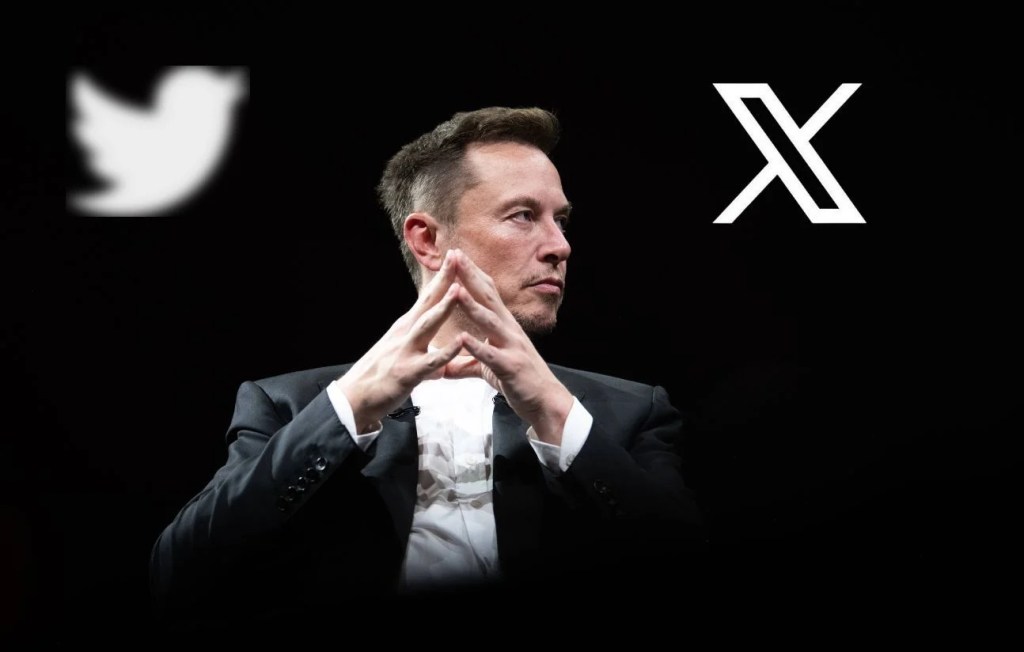
Elon Musk and Censorship on X
Elon Musk’s acquisition of Twitter, now rebranded as X, in 2022 generated significant interest and controversy. One of the most contentious aspects of his leadership has been his approach to censorship on the platform. While Musk has often presented himself as a « free speech absolutist » 1, his actions have frequently contradicted this stance, leading to accusations of censorship from various groups and sparking debate about the future of free expression on X. This article, based on an extensive review of recent articles, public statements, expert analyses, and user reactions, aims to provide a comprehensive overview of Elon Musk’s approach to censorship on X.
Musk’s Public Statements on Censorship
One of the research steps conducted for this article involved examining Elon Musk’s public statements on censorship. Musk has repeatedly emphasized his commitment to free speech, stating that he acquired Twitter to combat what he perceived as excessive censorship by the previous management. He has framed his vision of free speech as aligning with the law, stating, « By ‘free speech,’ I simply mean that which matches the law. I am against censorship that goes far beyond the law. » 2 This stance, however, has been criticized for its potential to legitimize censorship imposed by authoritarian governments2. For instance, Musk justified complying with content restrictions in India by stating, « The rules in India for what can appear on social media are quite strict, and we can’t go beyond the laws of the country. » 3
Despite these claims of adhering to local laws, Musk has been accused of selectively applying his principles and exhibiting a degree of inconsistency in his actions. He has faced criticism for readily complying with censorship requests from certain governments while publicly denouncing others3. This perceived inconsistency has fueled skepticism about his genuine commitment to free speech principles.
Censorship on X under Musk’s Ownership
Musk’s tenure as owner of X has been marked by several controversial incidents related to censorship. He has been accused of censoring journalists critical of him, suppressing Democratic voices, and amplifying those of far-right extremists1. These actions have led to a perception that X is becoming a platform that favors certain political viewpoints over others.
Musk’s actions have also contradicted his « free speech absolutist » image in other ways. For example, he has been criticized for revoking the blue tick verification of conservative accounts that openly disagreed with his pro-immigration views4. This incident highlights the tension between Musk’s stated commitment to free speech and his tendency to take action against those who express views he finds disagreeable.
Furthermore, Musk has been accused of « shadowbanning » users who disagree with him4. Shadowbanning refers to the practice of limiting the reach of an account without officially acknowledging the restriction. This tactic has been criticized for its lack of transparency and its potential to stifle dissent.
One of the most notable examples of censorship under Musk’s leadership is the removal of transgender protections in X’s hate speech policy1. This decision has been widely condemned by LGBTQ+ advocates and allies, who argue that it creates a hostile environment for transgender users and contributes to the spread of harmful content targeting this community. In addition, reports indicate that X has limited the visibility of tweets containing words like « trans, » further raising concerns about the platform’s treatment of LGBTQ+ issues1.
Musk’s leadership at X has also faced challenges from government authorities. In a significant incident, the Brazilian Supreme Court banned X after Musk initially refused to comply with court orders to censor content5. This event exemplifies the conflict between Musk’s free speech stance and government censorship demands, raising questions about his willingness to uphold his principles in the face of legal pressure.
The implications of X’s increased compliance with censorship requests are particularly concerning for users in countries with authoritarian governments2. In these countries, where freedom of speech and access to information are often restricted, X can serve as a vital platform for communication and dissent. However, if X readily complies with censorship requests from these governments, it risks becoming complicit in the suppression of free expression and the silencing of critical voices.
X’s Censorship Policies Before and After Musk
Before Musk’s acquisition, Twitter faced criticism for its content moderation policies, with some accusing it of censoring conservative viewpoints. However, under Musk’s leadership, the platform has been accused of a rightward shift, with increased compliance with censorship requests from authoritarian governments2. This shift is reflected in X’s transparency report, which shows a significant increase in compliance with government censorship requests under Musk compared to the previous leadership6.
Musk has implemented several changes to X’s censorship policies, including:
- Freedom of Speech, Not Freedom of Reach: This policy prioritizes reach restrictions over account suspensions for policy violations8. While this approach aims to avoid outright bans, it has been criticized for potentially limiting the visibility of dissenting voices and allowing harmful content to spread further.
- Changes to Child Safety Policy: X has broadened its child safety policy to encompass physical abuse and altercations involving minors8. This change has been generally welcomed, but concerns remain about its potential for overreach and the possibility of unintended consequences for users who share content related to child safety issues.
Expert Analysis and Commentary
Experts have expressed a range of opinions on Musk’s censorship policies. Some have criticized him for his inconsistent application of free speech principles and his susceptibility to government pressure3. Others have raised concerns about the potential for X to become a platform for misinformation and hate speech under his leadership9.
The European Commission has found X in breach of EU online content rules, accusing the platform of deceiving users with its « blue checkmark » verification system10. Since anyone can purchase a blue checkmark, the Commission argues that it no longer serves as a reliable indicator of account authenticity, potentially leading to the spread of misinformation and impersonation. X has also been criticized for its lack of transparency on advertising and its restrictions on access to public data for researchers10. These findings underscore the challenges Musk faces in navigating the complex regulatory landscape surrounding online content moderation and ensuring user trust.
Musk’s approach to censorship has also drawn criticism from individuals with differing political viewpoints. Steve Bannon, a prominent figure in right-wing circles, has criticized Musk for algorithm changes on X that he believes censor « negativity. » 11 This criticism highlights the ongoing debate about the role of algorithms in shaping online discourse and the potential for bias in their design.
User Reactions
User reactions to Musk’s censorship policies have been diverse and often polarized. Some users have expressed support for his commitment to free speech, while others have voiced concerns about the platform’s direction under his leadership12.
Some conservative users who initially supported Musk have criticized him for what they perceive as a betrayal of his free speech principles13. This criticism stems from incidents where Musk has taken action against conservative accounts that have expressed views he disagrees with, such as those critical of his stance on immigration14.
Progressive users have also expressed concerns about Musk’s censorship policies, particularly his amplification of far-right voices and his removal of protections for transgender users1. These users fear that X is becoming a less inclusive and more hostile environment for marginalized groups, with potentially serious consequences for their safety and well-being.
The feud between Musk and some MAGA supporters over immigration and H-1B visas further illustrates the complexity of user reactions to his policies14. This incident, which involved accusations of censorship and counter-accusations of coordinated attacks, highlights the challenges of moderating content and maintaining a balance between free speech and responsible platform management.
Studies and Reports
Several studies and reports have examined the impact of Musk’s censorship policies on X. One report found that X has become more compliant with censorship requests under Musk’s leadership, with a significant increase in account suspensions and content removals7. This finding suggests that Musk’s actions may be contributing to a decline in free expression on the platform and raising concerns about the potential for increased censorship in the future.
Another study highlighted the rightward shift of X under Musk, with increased visibility for right-wing viewpoints and a decline in the platform’s engagement with traditional news sources1. This shift has raised concerns about the potential for X to become an echo chamber for certain political ideologies, potentially limiting exposure to diverse perspectives and contributing to political polarization.
Alternatives to X
For users concerned about censorship and the direction of X under Elon Musk’s leadership, several alternative platforms have emerged. These platforms offer varying degrees of content moderation and emphasize different aspects of online community building. Some popular alternatives include:
| Platform | Description | Key Features | Content Moderation |
|---|---|---|---|
| Mastodon | A decentralized social network | Open-source, federated network of servers | Each server has its own moderation policies |
| Diaspora* | A non-profit, decentralized social network | User-owned « pods » for hosting data, focus on privacy | Community-based moderation |
| Minds | A free, open-source social network | Rewards users for contributions, emphasizes free speech | Transparency and user control over content filtering |
| WT:Social | A subscription-based social network | Aims to combat misinformation, promotes constructive dialogue | Editorial review and community moderation |
These platforms offer users a choice in how they engage with online communities and provide alternatives to the increasingly centralized and commercially driven environment of X. They represent a growing trend of users seeking greater control over their online experience and a desire for platforms that align with their values and priorities.
Synthesis and Conclusion
Elon Musk’s approach to censorship on X has been a source of ongoing controversy. While he has presented himself as a champion of free speech, his actions have often contradicted this stance, leading to accusations of censorship from various groups and raising concerns about the future of free expression on the platform.
One of the key contradictions in Musk’s approach is the tension between his self-proclaimed « free speech absolutism » and his compliance with government censorship requests2. While Musk has defended his compliance by citing the need to adhere to local laws, his critics argue that this approach undermines his commitment to free speech principles and allows authoritarian governments to exert undue influence on the platform.
The platform’s rightward shift under Musk’s leadership, coupled with increased censorship and content removals, has alienated some users and fueled the growth of alternative platforms1. This shift has raised concerns about the potential for increased polarization, the spread of misinformation, and the silencing of dissenting voices.
Musk’s inconsistent application of free speech principles, his perceived bias towards certain political viewpoints, and his controversial actions against specific groups, such as transgender users and journalists critical of him, have further contributed to the debate surrounding censorship on X1.
While Musk’s changes to X have undoubtedly had a significant impact on the platform’s landscape, the long-term consequences of his approach to censorship remain to be seen. Whether X can maintain its position as a central hub for online discourse while navigating the complex challenges of content moderation in an increasingly polarized world is a question that will continue to be debated in the years to come.
Works cited
Elon Musk fires back at Twitter censorship critic: ‘You’re such a numbskull’, accessed on January 7, 2025, https://www.independent.co.uk/tech/elon-musk-twitter-turkey-censorship-b2347509.html
The right-wing lurch of X under Elon Musk | US Election 2024 – Al Jazeera, accessed on January 7, 2025, https://www.aljazeera.com/economy/2024/8/13/the-right-wing-lurch-of-x-under-elon-musk
Under Elon Musk, Twitter has approved 83% of censorship requests by authoritarian governments | International | EL PAÍS English, accessed on January 7, 2025, https://english.elpais.com/international/2023-05-24/under-elon-musk-twitter-has-approved-83-of-censorship-requests-by-authoritarian-governments.html
Elon Musk’s Push for Free Speech Shows Clear Bias Towards His Own Interests, accessed on January 7, 2025, https://www.socialmediatoday.com/news/elon-musks-push-free-speech-shows-clear-bias-towards-interests/713803/
Elon Musk accused of censoring right-wing X accounts who disagree with him on immigration – Sky News, accessed on January 7, 2025, https://news.sky.com/story/elon-musk-accused-of-censoring-right-wing-x-accounts-who-disagree-with-him-on-immigration-13280740
Brazil, Elon Musk, X, and Censorship: What You Need to Know, accessed on January 7, 2025, https://adflegal.org/article/brazil-elon-musk-x-and-censorship-what-you-need-know/
The Betrayal of Free Speech: Elon Musk Buckles to Government Censorship, Again, accessed on January 7, 2025, https://mises.org/power-market/betrayal-free-speech-elon-musk-buckles-government-censorship-again
The Censor in Chief – Status News, accessed on January 7, 2025, https://www.status.news/p/elon-musk-government-censorship
Two years after the takeover: Four key policy changes of X under Musk, accessed on January 7, 2025, https://www.hiig.de/en/policy-changes-of-x-under-musk/
Elon Musk’s ‘social experiment on humanity’: How X evolved in 2024 – BBC, accessed on January 7, 2025, https://www.bbc.com/news/articles/c1elddq34p7o
‘Deceives users’: Elon Musk’s X found in breach of EU online content rules – Al Jazeera, accessed on January 7, 2025, https://www.aljazeera.com/news/2024/7/12/deceives-users-elon-musks-x-found-in-breach-of-eu-online-content-rules
Steve Bannon criticizes Elon Musk again, slams him for algorithm changes on X to censor negativity on the platform amid heated H1-B visa row – The Economic Times, accessed on January 7, 2025, https://m.economictimes.com/news/international/us/steve-bannon-criticizes-elon-musk-again-slams-him-for-algorithm-changes-on-x-to-censor-negativity-on-the-platform-amid-heated-h1-b-visa-row/articleshow/117003980.cms
Musk and his critics are both wrong about free speech on X – Deccan Herald, accessed on January 7, 2025, https://www.deccanherald.com/opinion/musk-and-his-critics-are-both-wrong-about-free-speech-on-x-3342133
Elon Musk accused of censoring conservatives on X who disagree with him about immigration – NBC 5 Dallas-Fort Worth, accessed on January 7, 2025, https://www.nbcdfw.com/news/national-international/elon-musk-accused-of-censoring-conservatives-on-x-who-disagree-with-him-about-immigration/3728756/?os=v&ref=app
Elon Musk claps back at MAGA censorship claims on X amid H-1B visa rift – Times of India, accessed on January 7, 2025, https://timesofindia.indiatimes.com/world/us/live-by-the-spam-die-by-the-spam-elon-musk-claps-back-at-maga-laura-loomer-censorship-on-x-claims-amid-h-1b-visa-rift/articleshow/116728219.cms
 Ninon.ia